Guide
What to do after water damage
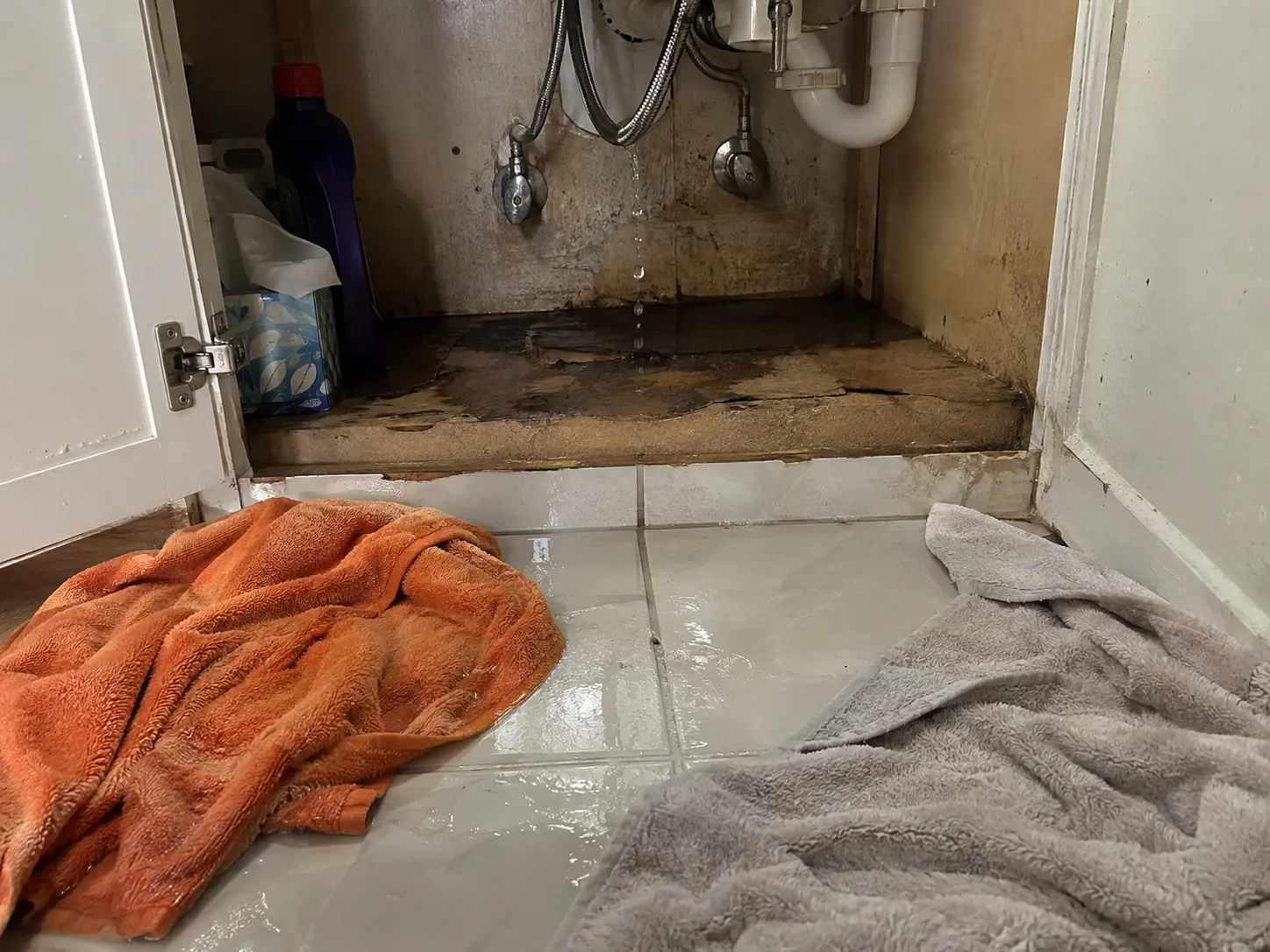
Make the home safe first: if water has reached outlets, wiring or appliances, stay out of standing water and let an electrician cut the power if the panel cannot be reached from a dry spot. Then stop the water, photograph everything before it is moved, and start drying. EPA says materials dried within 24 to 48 hours usually do not grow mold.
On this page
First-hours checklist
The sections below explain each step and the guidance behind it.
- Everyone out of standing water near outlets, cords or appliances
- Power off at the main panel from a dry spot, or an electrician called
- Gas smell? Leave the house and call the gas company or fire department
- Water source stopped or the leak isolated
- Photos and video of every wet room before anything is moved
- Receipts kept for anything bought or paid for
- Sewage, flood water or a flooded HVAC system? Professional called
- Drying started as soon as it is safe
Safety first
Water and electricity are the first risk. CDC guidance is specific: if electrical circuits or equipment are wet or near water, turn off the power at the main breaker or fuse, but do not walk through standing water to reach it; call an electrician instead. Never switch power on or off, or use an electric tool or appliance, while standing in water.
- Power back on: wait until a qualified electrician has inspected the electrical equipment, and until appliances are completely dry (CDC).
- Gas smell: if you smell gas or suspect a leak, CDC says to turn off the main gas valve, open the windows, leave the house and notify the gas company, police or fire department, without switching on lights or anything that could spark (CDC).
- Sewage or flood water: a flooded home may be contaminated with mold or sewage, which can make you sick (CDC). Treat that water as a hazard, not as a mopping job.
Stop the water and limit the damage
A leak keeps causing damage until it stops. EPA's first cleanup tip is to fix plumbing leaks and other water problems as soon as possible and to dry all items completely (US EPA). Florida's Homeowner Claims Bill of Rights also tells policyholders to make and document emergency repairs that are necessary to prevent further damage (Florida Statutes s. 627.7142).
Drying starts as soon as it is safe. CDC suggests opening windows and doors if the weather allows, and, once an electrician has confirmed the power is safe, removing standing water with a wet-dry shop vacuum or a pump (CDC). If you can already see mold, EPA says to gently clean the visible mold before starting fans or dehumidifiers, so the fans do not spread it (US EPA).
Do not run the central air to dry the house if the system may have taken on water. CDC advises having the HVAC system checked by a professional experienced in mold cleanup before turning it on, because a contaminated system spreads mold through the house (CDC).
Document the damage before it changes
Photographs taken before anything is moved are the record your insurer and any contractor will work from. The Homeowner Claims Bill of Rights lists three things to keep (s. 627.7142):
- The damaged property, if feasible.
- All receipts, including for emergency repairs.
- Photographs or video of the damage, before and after any repairs.
The Ready.gov flood claims checklist adds two habits that help later: gather receipts or invoices for damaged items if you have them, and photograph and keep receipts for completed repairs, because a future claim on the same item may require proof of repair. The Florida Division of Emergency Management recommends having up-to-date photos of your home before a disaster for the same reason.
| Record | Why it matters |
|---|---|
| Wide photos of each wet room, then close-ups | Shows extent and materials before removal |
| The source of the water (pipe, appliance, roof, flood line) | Where the water came from and what it carried decide its category (see below) |
| Receipts for anything you buy or pay for | Florida's claims bill of rights says to keep all receipts |
| Damaged items you remove | Keep them if feasible until the insurer has seen them |
When to call a professional
EPA says you can usually clean and dry materials that do not soak up water, and that materials which soak up a lot of water and cannot be cleaned and dried should be thrown away (US EPA). Beyond that, the official guidance points to a professional in these situations:
| Situation | Who the guidance points to | Source |
|---|---|---|
| Water near wiring, or the panel can only be reached through water | An electrician | CDC |
| Damage caused by sewage or other contaminated water | A professional experienced in cleaning buildings damaged by contaminated water. See sewage cleanup. | US EPA |
| A lot of water damage, or mold over about 10 square feet | Follow EPA's remediation guidance; in Florida, professional mold remediation over 10 square feet is licensed work | US EPA, s. 468.8411 |
| The HVAC system may have been flooded | An HVAC professional experienced in mold cleanup | CDC |
| You are not sure it is safe to go in | EPA says a professional may be able to help you decide whether it is safe to enter | US EPA |
When you hire, EPA suggests asking about qualifications, training and experience, and checking references (US EPA). Our guide to choosing a water damage company turns that into a call checklist with the Florida license checks.
What happens when a restoration company assesses the damage
A restoration company starts by inspecting and gathering information, then makes a preliminary determination of the category of water to set the scope of work. That is the process described in the industry's ANSI/IICRC S500 standard, as summarized in a 2026 position statement from the standard's consensus body (IICRC).
The category matters because it changes what can be dried in place and what must be removed. S500 defines Category 3 water as "grossly contaminated", with examples that include sewage and flooding from seawater. The same 2026 statement says that wind-driven rain and other water from weather-related events are "not automatically considered Category 3 Water": the category has to come from conditions observed at the property.
If a company tells you the water is Category 3, it is reasonable to ask what it observed that led to that call; it affects the scope and the bill. More on that in what drives a restoration estimate.
Mold: what the guidance says
EPA's guidance is a likelihood, not a deadline: "If wet or damp materials or areas are dried 24-48 hours after a leak or spill happens, in most cases mold will not grow" (US EPA). For flood water, EPA notes that mold can grow on wood, drywall, carpet and furniture that remain wet for more than 24 hours (US EPA).
- Moldy area under about 10 square feet (roughly 3 ft by 3 ft): EPA says in most cases you can handle it yourself (US EPA).
- Do not paint or caulk over mold; clean and dry the surface first (US EPA).
- EPA does not recommend biocides such as chlorine bleach as a routine practice, and never mix bleach with ammonia or other chemicals (US EPA, US EPA).
- Testing is usually not needed when mold is visible: EPA says sampling is unnecessary in most cases where growth is present (US EPA).
Water damage in Miami? Call us.
Tell us what happened and where. Our water damage restoration service in Miami connects you with a local restoration crew that serves your address.
Call (305) 555-0123Questions
How fast does mold grow after water damage?
EPA says that if wet or damp materials are dried 24 to 48 hours after a leak or spill, in most cases mold will not grow. For flood water, EPA notes mold can grow on wood, drywall, carpet and furniture that stay wet for more than 24 hours. Neither is a guarantee for a particular home.
Can I turn the power back on after a leak near outlets?
CDC advises not to turn power back on until electrical equipment has been inspected by a qualified electrician, and never to switch power on or off while standing in water.
Should I clean up sewage water myself?
EPA advises calling a professional with experience cleaning buildings damaged by contaminated water when the damage was caused by sewage or other contaminated water.
Do I need to keep the damaged materials for my insurer?
Florida's Homeowner Claims Bill of Rights tells policyholders to keep the damaged property if feasible, keep all receipts, and photograph or video the damage before and after repairs.
Is bleach the right way to kill mold after water damage?
EPA does not recommend biocides such as chlorine bleach as a routine practice in mold cleanup, and says never to mix bleach with ammonia or other chemicals. Clean surfaces with water and detergent first.
Sources
- CDC: What to Do to Protect Yourself From Electrical Hazards
- CDC: Safety Guidelines: Reentering Your Flooded Home
- US EPA: A Brief Guide to Mold, Moisture and Your Home
- US EPA: Mold Cleanup in Your Home
- US EPA: Flood Cleanup: Protect Indoor Air and Your Health
- Florida Statutes: s. 627.7142, Homeowner Claims Bill of Rights
- Ready.gov (FEMA): Flood insurance claims checklist
- Florida Division of Emergency Management: Flood insurance
- IICRC: S500 Consensus Body position statement: Category of Water and Weather Related Events (2026)
- Florida Statutes: s. 468.8411, Mold-related services: definitions
Sources were read on October 14, 2026. Something wrong or out of date? Send a correction.