Guide
Water damage restoration cost: what drives an estimate
The cost of water damage restoration follows the scope of the job: how much area got wet, what the water carried, which materials soaked it up, how many days drying takes, and whether repairs are included. This guide explains those drivers and how to compare itemized estimates line by line. It gives no price ranges: we found no dated, sourced Miami figure.
On this page
What a restoration estimate covers
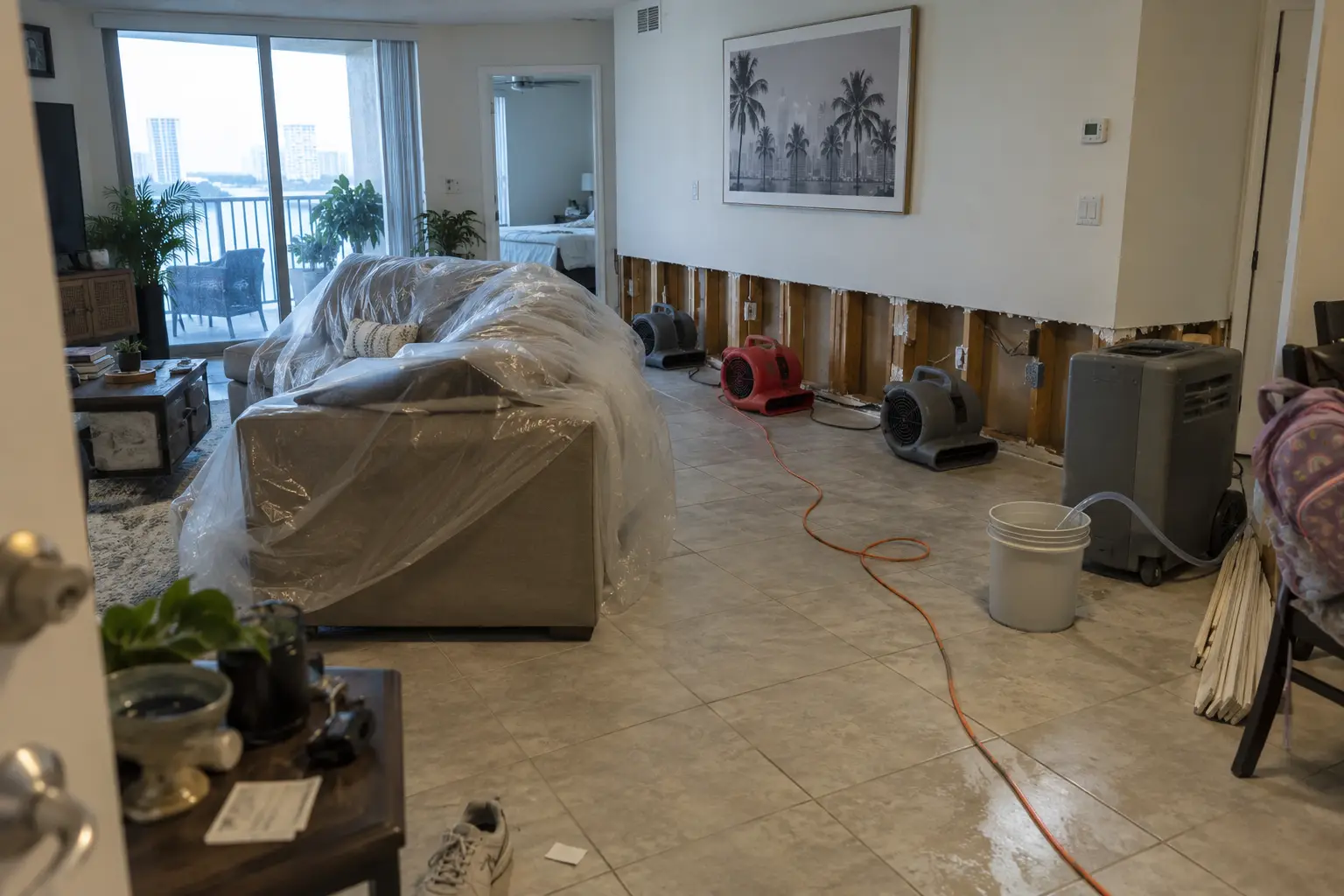
A restoration estimate prices the work needed to get the building dry, clean and, if included, rebuilt. The steps behind the lines come from the official cleanup guidance: remove the water, throw away materials that soak up a lot of water and cannot be cleaned and dried, clean, and dry everything completely (US EPA). Expect lines grouped roughly like this, and ask for any group that is missing to be itemized:
| Group of lines | What it pays for |
|---|---|
| Inspection and documentation | Finding where the water went, deciding the category of water, photos and moisture readings |
| Water removal | Extracting standing water |
| Removal and disposal | Taking out wet materials that cannot be dried (for example, soaked drywall or carpet pad) |
| Drying equipment | Fans and dehumidifiers for structural drying, and the number of days they run |
| Cleaning | Cleaning affected surfaces; more extensive for contaminated water |
| Monitoring | Return visits to take readings until materials are dry |
| Mold remediation, if needed | A separate scope; licensed work in Florida above 10 square feet |
| Repairs, if included | Putting back drywall, flooring, cabinets and finishes |
What changes the scope
Two estimates for "the same leak" can differ because the companies saw a different scope. These are the things that move it:
- Category of water. The ANSI/IICRC S500 standard defines Category 3 water as "grossly contaminated", with examples such as sewage and seawater flooding, and contaminated water changes what must be removed and cleaned. The standard's consensus body said in 2026 that wind-driven rain and other weather-related water are "not automatically considered Category 3 Water"; the category should follow what was observed at the property (IICRC).
- Extent. How many rooms and how far water wicked into walls, cabinets and subfloors. Hidden moisture behind drywall or under flooring adds removal and drying.
- Materials. EPA says you can usually clean and dry materials that do not soak up water, and should throw away materials that soak up a lot of water and cannot be cleaned and dried (US EPA). A tile floor and a carpeted floor are different jobs.
- Time wet. EPA advises drying water-damaged areas within 24 to 48 hours to prevent mold growth (US EPA). Water that sat longer is more likely to bring mold work into the scope.
- Drying time. EPA says drying can take several days to weeks (US EPA). Each extra day adds equipment and monitoring.
- Mold. Mold growth over about 10 square feet takes it out of do-it-yourself territory in EPA's guidance (US EPA) and, in Florida, makes it licensed mold remediation (s. 468.8411).
- Access and systems. A flooded HVAC system should be checked and cleaned by a professional before it is turned on (CDC), which can add a separate trade to the bill.
Mitigation and repairs on the bill
Many jobs are billed in two parts: mitigation (removal, drying, cleaning) and repairs (putting the house back). Some companies do both; others stop after drying and hand repairs to a contractor. Ask whether the estimate you are looking at covers both, and whether repairs are a separate contract with a separate license. A licensed contractor obtains the permits for repair work; being asked to pull them yourself is a warning sign (Miami-Dade County).
On deposits: a contractor who receives more than 10 percent of the contract price as an initial payment for residential repair or restoration must apply for permits within 30 days and start work within 90 days after the permits are issued, unless you agree in writing to a longer period (s. 489.126). The Florida Attorney General's post-storm advice is never to pay the full amount upfront (Florida Attorney General).
Insurance and the estimate
Your insurer prepares its own estimate, and you are entitled to see it. Florida's Homeowner Claims Bill of Rights says you can receive a copy of any detailed estimate of the loss within 7 days after the insurer's adjuster generates it, and tells you to keep receipts and photograph damage before and after repairs (s. 627.7142). Comparing the adjuster's estimate with the contractor's, line by line, is the quickest way to find what one of them missed. The Ready.gov claims checklist says to review the adjuster's estimate carefully for accuracy and completeness and to work with the adjuster to correct mistakes.
Coverage questions belong with your insurer or a licensed professional. This guide explains what an estimate contains; it does not say what a policy will pay.
Estimate comparison worksheet
Copy this into a notebook or spreadsheet and fill one column per estimate. A blank cell is a question for that company.
| Line | Estimate A | Estimate B | Ask if it differs |
|---|---|---|---|
| Category of water stated | What did you observe that set the category? | ||
| Rooms and square footage affected | How did you measure the wet area? | ||
| Materials removed (type and quantity) | Why can these not be dried in place? | ||
| Drying equipment (units × days) | How many days do you expect, and what ends drying? | ||
| Monitoring visits and readings | Will I get a copy of the readings? | ||
| Cleaning or antimicrobial treatment | Is it needed for this category of water? | ||
| Mold remediation (if any) | License number for the remediator? | ||
| Repairs included | Separate contract? Which contractor license? | ||
| Deposit and payment schedule | What is due before work starts? | ||
| Total, and what is excluded | What would add cost later? |
Questions to ask about an estimate
- Is this estimate itemized, with quantities and unit prices?
- Does it cover mitigation only, or repairs too?
- What category of water did you find, and what did you see that decided it?
- What will you remove, and why can it not be dried?
- How will you decide drying is finished, and will I get the readings?
- What could change the price after work starts?
- What deposit do you need, and when are the other payments due?
For help with a Miami job, see our water damage services, then use our guide to choosing a company to compare their answers.
Water damage in Miami? Call us.
Tell us what happened and where. Our water damage restoration service in Miami connects you with a local restoration crew that serves your address.
Call (305) 555-0123Questions
How much does water damage restoration cost in Miami?
We do not publish a Miami average: we found no source that gives a dated Miami figure with its scope and sample. The price of a job depends on the area that got wet, the category of water, the materials affected, drying time and repairs. Get itemized written estimates and compare them line by line.
How long does drying take?
EPA says drying can take a long time, usually several days to weeks, and that wet areas should not be sealed or painted until the materials are completely dry inside. Each extra day of drying adds equipment and monitoring to the bill.
How do I know the materials are dry?
EPA suggests a moisture meter and says materials such as walls, cabinets and flooring should read 15% or less to be ready for refinishing. Ask the company for its final readings.
Can I see my insurer’s estimate?
Florida's Homeowner Claims Bill of Rights says you can receive a copy of any detailed estimate of the loss within 7 days after your insurer's adjuster generates it.
Is a large deposit normal?
Miami-Dade County lists a large down payment before work begins as a warning sign. Under s. 489.126, a contractor who takes more than 10 percent of the contract price up front for residential work must apply for permits within 30 days and start within 90 days after permits issue, unless you agree otherwise in writing.
Sources
- IICRC: S500 Consensus Body position statement: Category of Water and Weather Related Events (2026)
- US EPA: Flood Cleanup: Protect Indoor Air and Your Health
- US EPA: A Brief Guide to Mold, Moisture and Your Home
- US EPA: Mold Cleanup in Your Home
- Florida Statutes: s. 468.8411, Mold-related services: definitions
- Florida Statutes: s. 627.7142, Homeowner Claims Bill of Rights
- Ready.gov (FEMA): Flood insurance claims checklist
- Florida Statutes: s. 489.126, Moneys received by contractors
- Miami-Dade County: What to Know When Hiring a Contractor (brochure)
- Florida Attorney General: Consumer alert: disaster-related scams (11 Oct 2024)
- CDC: Safety Guidelines: Reentering Your Flooded Home
Sources were read on October 14, 2026. Something wrong or out of date? Send a correction.