Miami Water Restorations · Miami, Florida
Mold remediation and mold removal in Miami
Mold follows water that was not dried in time. Its size and source decide whether it is a weekend job or licensed work.
Mold covering more than about 10 square feet is a professional job: EPA points to its remediation guidance at that size, and in Florida professional mold remediation of more than 10 square feet is licensed work. Call us and we will connect you with a local restoration crew that serves your address; ask for the Florida mold remediator license number before work starts. (US EPA; Fla. Stat. 468.8411)
Mold remediation and removal is one part of our water damage restoration services in Miami: one call connects you with a local restoration crew that serves your address. Not sure where to start? Read how to check a company’s Florida licenses.
Mold testing, mold removal and rebuilding: who does which part
Mold remediation is the removal, cleaning or other treatment of mold and of the materials it grew on; Florida law uses the term for areas of more than 10 square feet. Testing is a separate job: Florida licenses mold assessors separately from mold remediators, and an assessment includes sampling and evaluating where the mold came from and how far it has spread. Rebuilding what was removed is a third job. (Fla. Stat. 468.8411; Florida DBPR)
What to check first
- Where the moisture is coming from, and whether it has been fixed.
- The size of the affected area: above 10 square feet, professional mold remediation is licensed work in Florida. (Fla. Stat. 468.8411)
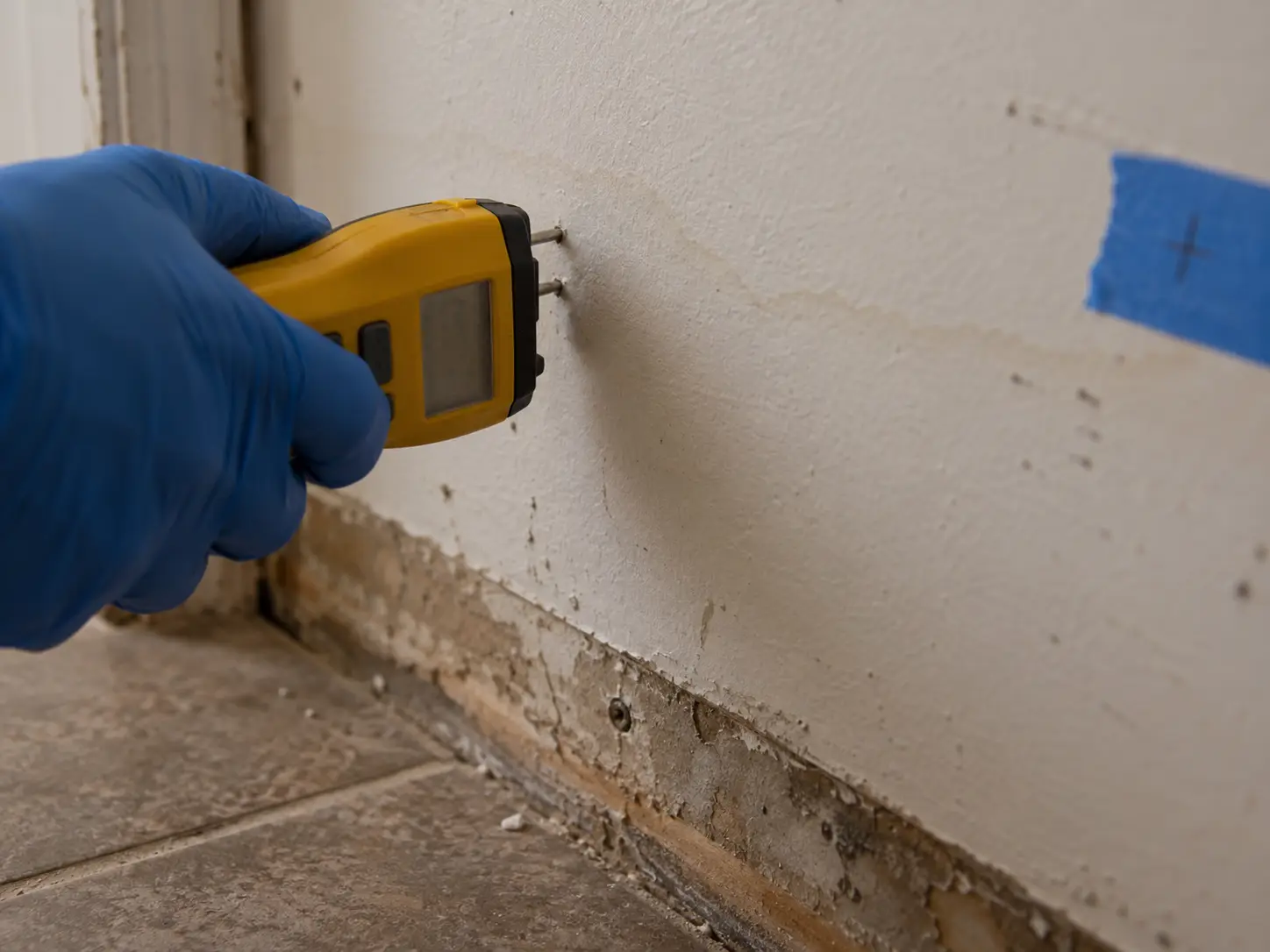
- Growth that may be hidden behind drywall, wallpaper or paneling, or above ceiling tiles. (US EPA)
- Whether the air conditioning system is involved: the air handler, coils, drain pan or ducts.
The work, in order
- Intake: tell us where the mold is, roughly how large the area looks and what water caused it.
- Scope: ask the crew to put in writing what it will clean and what it will remove, and, above 10 square feet, ask for the remediator’s MRSR license number. (Florida DBPR)
- Moisture first: the Florida Department of Health says any water leaks must first be fixed when solving mold problems. (Florida Department of Health)
- Remediation: cleaning what can be cleaned and removing what cannot. The Florida Department of Health says materials that are not easily cleanable, such as drywall, carpet padding and insulation, may need to be removed and replaced. (Florida Department of Health)
- Finish check: no visible mold or moldy odors, and no new water damage or mold when the area is looked at again shortly after, as EPA describes. (US EPA)
Separate jobs to plan for
- Mold testing (assessment), if anyone needs it. Florida bars a mold assessor’s company from remediating a structure it assessed within the last 12 months, with an exception for certain certified contractors, so ask who did the testing. (Fla. Stat. 468.8419)
- Fixing the water source: a plumber, roofer or HVAC technician, depending on where the water came from.
- Rebuilding walls, floors and cabinets. Florida law says a mold remediator may not do work that needs a chapter 489 contractor license unless also licensed under that chapter or complying with it, so ask who will rebuild and under which license. (Fla. Stat. 468.8411)
Why mold follows water damage in Miami
Mold needs three things: nutrients, a suitable place to grow and moisture. The Florida Department of Health notes that common building materials such as wood and sheetrock, and even settled dust, provide the food, so controlling moisture is the key to stopping indoor mold growth. (Florida Department of Health)
Time matters. EPA says that if wet or damp materials are dried 24 to 48 hours after a leak or spill, in most cases mold will not grow, and it recommends keeping indoor humidity below 60 percent, ideally 30 to 50 percent. (US EPA)
The Department of Health lists the moisture sources that matter in Florida homes, including storm water and storm surge, overflowing sinks, toilets and air conditioner drain pans, condensation from high indoor humidity, roof and wall leaks, broken pipes, and warm, moist outdoor air. (Florida Department of Health)
Signs of mold after a leak or flood
Indoor mold can usually be seen or smelled. The Department of Health describes growth that looks cottony, velvety, rough or leathery, in colors from white and gray to brown, black, yellow or green, often as staining or fuzzy growth on walls, ceilings, wood or paper. It also recommends checking around air handlers for standing water and inspecting evaporator coils, drain pans and drain lines. (Florida Department of Health)
Mold also hides. EPA lists the back side of drywall, wallpaper or paneling and the top side of ceiling tiles among the places to suspect when a room smells moldy but nothing is visible, and warns that disturbing those spots, such as peeling wallpaper, can release a burst of spores. (US EPA)
When mold removal is a professional job
EPA says that in most cases you can handle a moldy area smaller than about 10 square feet yourself. It points to professional help when there has been a lot of water damage or more than 10 square feet of mold, when the damage came from sewage or other contaminated water, or when the HVAC system may be contaminated. (US EPA)
Florida’s mold remediation license rule
Florida defines mold remediation as the removal, cleaning, sanitizing, demolition or other treatment of mold or mold-contaminated matter of greater than 10 square feet, and the Department of Business and Professional Regulation licenses mold remediators (license prefix MRSR). You can verify a license by name or number with DBPR. (Fla. Stat. 468.8411; Florida DBPR)
One rule surprises people: a company that assessed a structure for mold may not remediate it within 12 months, and a remediator’s company may not assess a structure it remediated in that period, with an exception for certain certified contractors. (Fla. Stat. 468.8419)
Do you need a mold test?
Usually not. EPA says sampling is unnecessary in most cases where mold is visible, and the Florida Department of Health goes further: it does not recommend mold testing or sampling to find out whether you have a mold problem or what kind of mold is growing, noting there are no health or exposure-based standards to judge a sampling result against. (US EPA; Florida Department of Health)
Where air sampling is done, the Department of Health says it can be expensive and should only be done by experienced professionals. (Florida Department of Health)
What mold remediation involves
EPA’s advice for hiring a contractor is to make sure it has experience cleaning up mold, check references, and ask it to follow EPA’s guidance for mold remediation in schools and commercial buildings. Its cleanup sequence for homes runs like this: (US EPA)
- Fix the leak or water problem first and dry everything completely.
- Scrub mold off hard surfaces with detergent and water, then dry them completely.
- Throw away absorbent or porous materials, such as ceiling tiles and carpet, that have become moldy.
- Do not paint or caulk over mold; clean it and dry the surface first.
- Keep the area dry: EPA’s first rule is that the key to mold control is moisture control.
Mold and your health
The Florida Department of Health groups mold health problems into four kinds: allergic illness, irritant effects, infection and toxic effects. Sensitive people may get nasal and sinus congestion, a dry cough, wheezing, rashes or watery eyes; mold can trigger asthma attacks; and people with chronic illness or weakened immune systems may be more likely to get infections. It considers allergic disease the most likely health problem from mold exposure. (Florida Department of Health)
If you have health concerns, EPA advises talking to a health professional before starting cleanup. (US EPA)
Mold in Miami condos
In a condo, who repairs what depends on Florida law and your declaration. The association’s policy covers the condominium property as built, but excludes items inside a unit such as floor, wall and ceiling coverings, appliances, water heaters and built-in cabinets, which are the unit owner’s responsibility. Report mold that may come from a common element or another unit to the association promptly. (Fla. Stat. 718.111)
What affects the cost of mold remediation
We do not publish Miami price averages because we found no dated, sourced figure. The scope drives the price: how large the affected area is (above 10 square feet, professional remediation is licensed work in Florida), which materials have to be removed rather than cleaned, whether the mold is hidden behind finishes, whether the HVAC system is involved, and whether the moisture source still has to be fixed. Ask for a written, itemized estimate. (Fla. Stat. 468.8411; US EPA)
| Situation | Guidance | Source |
|---|---|---|
| Under about 10 sq ft, clean water | Usually manageable yourself | EPA |
| Over about 10 sq ft | Professional job; licensed mold remediation in Florida | EPA; Fla. Stat. 468.8411 |
| After sewage or contaminated water | Professional experienced with contaminated water | EPA |
| HVAC may be contaminated | Get the system checked before running it | EPA; CDC |
| You just want to know what kind of mold it is | Testing not recommended to identify mold type | Florida Department of Health |
Call us about your mold remediation and removal
Tell us what happened and where. We will connect you with a local restoration crew that serves your address.
Call (305) 555-0123Questions
Do I need a mold test or inspection first?
Usually not. EPA says sampling is unnecessary in most cases where mold is visible, and the Florida Department of Health does not recommend testing to find out whether you have mold or what kind it is.
How fast does mold grow after a leak?
EPA says that if wet materials are dried 24 to 48 hours after a leak or spill, in most cases mold will not grow. After that the risk rises.
Is bleach enough?
EPA does not recommend bleach as a routine practice in mold cleanup, and says never to mix it with ammonia or other chemicals. Clean with water and detergent and fix the moisture.
Who can remove mold in Florida?
Professional mold remediation of more than 10 square feet is licensed work under Florida law. Ask for the remediator’s MRSR license number and check it with DBPR.
Can the company that tested my home also remove the mold?
Florida law bars a mold assessor’s company from remediating a structure it assessed within 12 months, with an exception for certain certified contractors.
How do I know mold cleanup is finished?
EPA’s test: the water or moisture problem is completely fixed, visible mold and moldy odors are gone, a revisit shortly after shows no new water damage or mold, and people can use the area without health complaints.
Will painting over mold fix it?
No. EPA says not to paint or caulk moldy surfaces; clean the mold and dry the surface first, because paint over mold is likely to peel.
Sources
- US EPA: Mold Cleanup in Your Home
- US EPA: A Brief Guide to Mold, Moisture and Your Home
- US EPA: Flood Cleanup: Protect Indoor Air and Your Health
- Florida Department of Health: Mold: Indoor Mold and Your Health
- Florida Statutes: s. 468.8411, Mold-related services: definitions
- Florida Statutes: s. 468.8419, Mold-related services: prohibitions
- Florida DBPR: Mold-Related Services
- Florida Statutes: s. 718.111, The association (condominium insurance and repair responsibilities)
- CDC: Safety Guidelines: Reentering Your Flooded Home