Miami Water Restorations · Miami, Florida
Structural drying for Miami homes and condos
The standing water is the easy part. The water inside the walls, cabinets and floor is what decides whether mold follows.
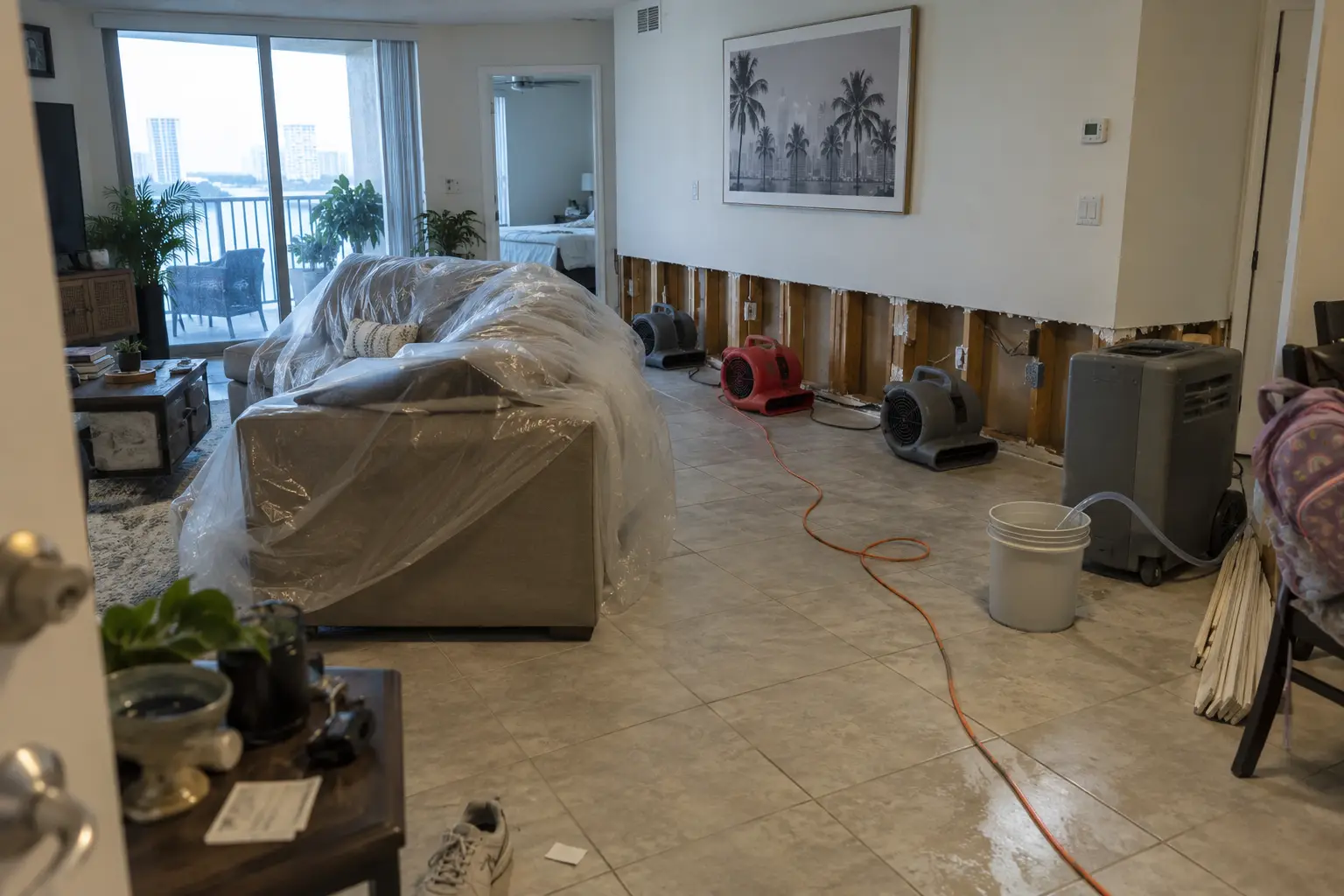
Structural drying removes the water that soaked into drywall, framing, cabinets and floors after the standing water is gone. EPA says drying usually takes several days to weeks, and that materials such as walls and flooring should read 15% or less on a moisture meter before they are refinished. (US EPA)
Structural drying is one part of our Miami water damage restoration: one call connects you with a local restoration crew that serves your address. Not sure where to start? Read how drying days show up on a restoration estimate.
How a structural drying job runs, from first readings to repairs
Structural drying starts once the standing water is out and ends when the materials are dry enough for repairs. The industry standard for this work, ANSI/IICRC S500, has the restorer set dry standards and drying goals on the first visit, so ask what dry standard the crew set before drying starts. If you are weighing renting fans and a dehumidifier yourself against having a crew run the drying, ask what the crew will measure and how you will both know the building is dry. (IICRC)
What to check first
- Starting moisture readings in each wet room.
- How far the water wicked: up the drywall, under cabinets and flooring, and into the slab.
- Damage that was there before this loss, so it is not mistaken for new damage.
- Which materials can be dried in place and which have to come out.
The work, in order
- Assessment: the checks above, and the dry standard the materials have to reach.
- Drying plan: what comes out, which cabinets and built-ins are opened or removed, and whether the house is closed up and dehumidified. Ask to see the plan before work starts.
- Monitoring: ask how often the crew will take readings until every material reaches the dry standard, and for copies.
- Completion: drying ends when the readings meet the dry standard, including the slab before new flooring goes down, not when the surface looks dry. (US EPA)
- Handoff to repairs: ask for the final readings and pass them to whoever rebuilds.
Separate jobs to plan for
- Water removal, if standing water is still there: it comes before drying.
- Repairs: drywall, baseboards, cabinets and flooring go back once the readings say dry. Ask whether that is a separate contract.
- Mold remediation, if mold has already grown on materials that stayed wet.
- Checking and cleaning the air conditioning system, if it took on water.
Why the building still needs drying after the water is gone
EPA’s flood guidance is to dry the house and everything in it completely, and not to seal wall cavities or paint surfaces that were wet until the materials are completely dry inside. (US EPA)
Wet materials left behind are where mold starts. EPA notes that mold can grow on wood, drywall, carpet and furniture that remain wet for more than 24 hours after flooding. (US EPA)
Drying in Miami’s humid air
Open windows do not always help here. EPA notes that very humid, warm outdoor air can slow drying down, and suggests closing outside doors and windows and using fans, dehumidifiers, air conditioners or heaters instead when power is available. (US EPA)
For the house as a whole, EPA recommends keeping indoor relative humidity below 60 percent, ideally between 30 and 50 percent, which a small humidity meter can measure. (US EPA)
How dryness is measured
Dry is a reading, not a look. EPA suggests a moisture meter and gives 15% or less as the point at which materials such as walls, cabinets and flooring are ready for refinishing. (US EPA)
Opening up hidden spaces so they can dry
Water hides behind cabinet doors, under drawers and inside built-ins. EPA’s drying advice is to open inside doors and cabinets and remove drawers, shelves and built-in furniture such as cabinets so hidden surfaces can dry, then run fans and dehumidifiers through the house if power is available. Ask the crew which built-ins it plans to remove and whether they can go back in afterwards. (US EPA)
Is the concrete slab dry?
EPA says to be sure a concrete slab is dry before replacing the flooring over it, to prevent mold growth, and describes a simple check: (US EPA)
- Tape the edges of a clear piece of plastic sheeting to the slab.
- Wait about 16 hours.
- If moisture is visible on the plastic, the slab is still too wet for new flooring.
Your air conditioning during drying
If the HVAC system took on water, CDC advises having it checked and cleaned by a professional experienced in mold cleanup before turning it on, because a contaminated system spreads mold through the house. (CDC)
| Checkpoint | Ask the crew |
|---|---|
| Set-up | What did you measure at the start, and where? |
| Removal | What are you removing, and why can it not be dried in place? |
| During drying | How often will you take readings, and can I have copies? |
| Humidity | What indoor humidity are you holding the house at? |
| Finish | Are all materials at or below the dry standard, and is the slab dry, before repairs start? |
Call us about your structural drying
Tell us what happened and where. We will connect you with a local restoration crew that serves your address.
Call (305) 555-0123Questions
How long does structural drying take?
EPA says drying can take a long time, usually several days to weeks, depending on how much got wet and what it is made of.
Do the kitchen cabinets have to come out?
Sometimes. EPA suggests removing drawers, shelves and built-in furniture such as cabinets so the hidden surfaces behind them can dry. Ask the crew what its moisture readings show.
Should I open the windows to help it dry?
Not when the outside air is hot and humid. EPA notes that humid, warm outdoor air can slow drying and suggests closing up and running fans, dehumidifiers or air conditioning instead.
Can I paint once the wall looks dry?
No. EPA advises against applying paint or sealants to any surface that was wet until you are sure the materials are completely dry on the inside.
Should the fans run if I can already see mold?
EPA says to gently clean visible mold before starting fans or dehumidifiers, so the fans do not spread it.