Miami Water Restorations · Miami, Florida
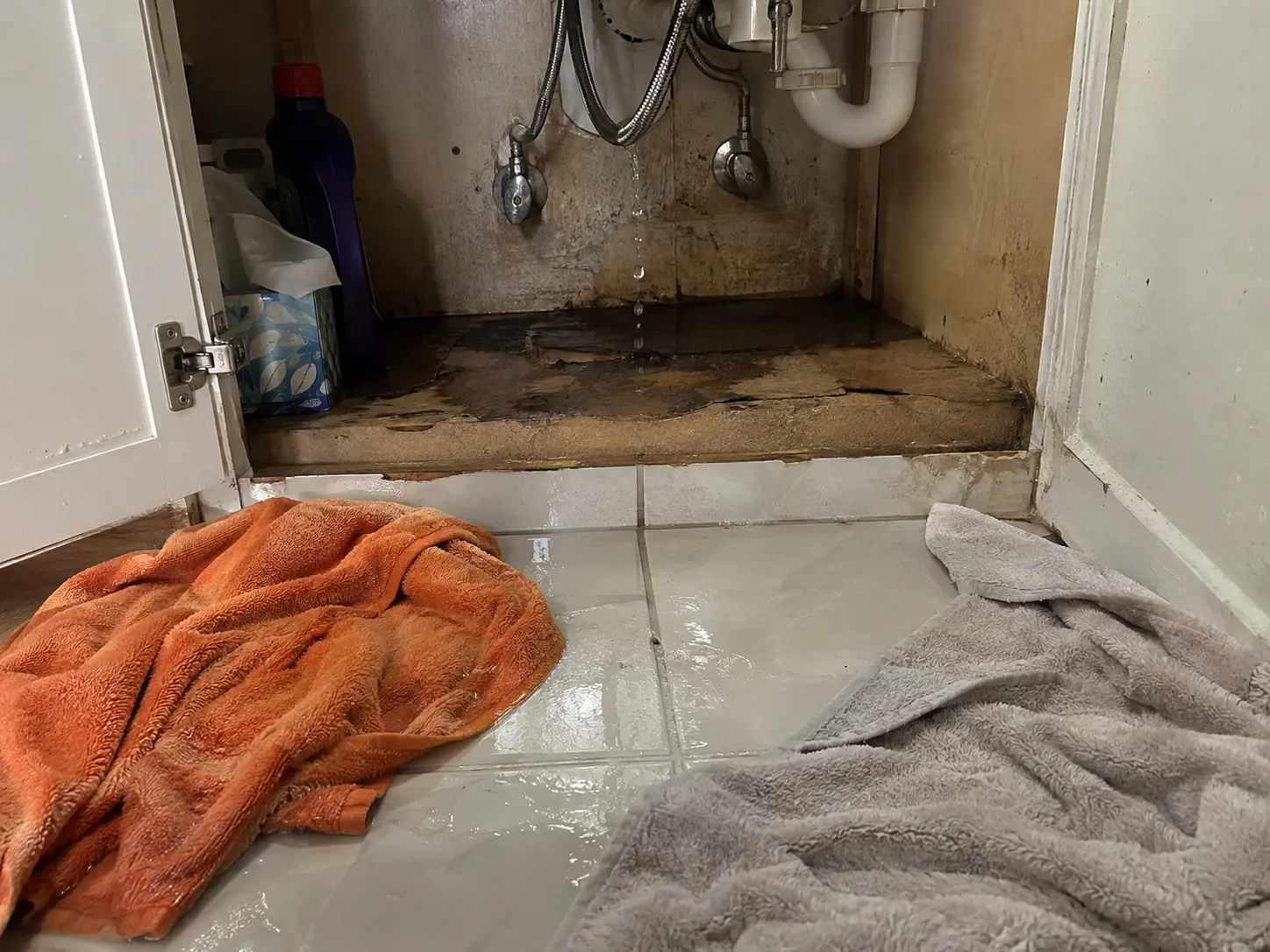
Water damage from leaks and burst pipes in Miami
A leak keeps doing damage until it stops. What you do in the first hour shapes the next week.
A burst supply line, failed water heater or leaking AC drain keeps causing damage until the water stops. Stop the source, document what you see, and get drying started: EPA says wet materials dried within 24 to 48 hours usually do not grow mold. (US EPA)
Leaks and burst pipes is one part of our water damage restoration across Miami: one call connects you with a local restoration crew that serves your address. Not sure where to start? Read our first-hours checklist.
Who fixes the leak, and who cleans up the water damage
Repairing the burst pipe, water heater or AC drain is a plumber’s or HVAC technician’s job; we do not offer emergency plumbing or leak detection. This job is the water damage cleanup and drying: removing the water, taking out what cannot be dried, and drying the rest. The industry standard for this work, ANSI/IICRC S500, lists the status of water source control among the first things the restorer asks about, so stop the water if you can, or tell us if you cannot. (IICRC)
What to check first
- Whether the water is fully off, at the fixture valve or the main shut-off.
- Where the water ran: behind baseboards, under cabinets and flooring, into the ceiling or the unit below.
- Damage that was there before this leak, such as old stains, so it is not mixed up with the new damage.
- In a condo, whether the water came from your unit, the unit above or the common elements.
The work, in order
- Stop the water. The repair to the pipe, heater or drain goes to a plumber or HVAC technician.
- The crew inspects, finds how far the water spread and determines the category of water, as the S500 standard describes. (IICRC)
- Standing water comes out, and wet materials that cannot be dried in place are removed.
- Drying until the materials are dry. Ask how the crew will measure that, and for copies of the readings.
Separate jobs to plan for
- Repairing the pipe, supply line or water heater: a plumber.
- Repairing the AC drain line, drain pan or air handler: an HVAC technician.
- Finding a leak you cannot see, inside a wall or under the slab: a plumber or a leak detection service.
- Rebuilding drywall, cabinets and flooring that had to come out. In a condo, ask the association which repairs it handles.
Stop the water
EPA’s first cleanup step is to fix plumbing leaks and other water problems as soon as possible and dry all items completely. Florida’s claims bill of rights tells policyholders to make and document the emergency repairs needed to prevent further damage. (US EPA; Fla. Stat. 627.7142)
Check where the water went
Water travels behind finishes. EPA lists the back side of drywall, wallpaper or paneling and the top side of ceiling tiles among the places mold hides after water damage, so ask the crew to measure behind and below the visible wet area. (US EPA)
AC drain pans and condensation
Air conditioners are a leak source of their own. The Florida Department of Health lists overflowing air conditioner drain pans and condensation from high indoor humidity among indoor moisture sources, and recommends checking around air handlers for standing water and routinely inspecting evaporator coils, drain pans and drain lines. (Florida Department of Health)
Signs of a hidden leak
Not every leak announces itself. The Florida Department of Health suggests looking for signs of moisture or water damage such as water stains, standing water and condensation, and EPA adds that a room that smells moldy when no mold is visible may have mold hidden behind drywall, wallpaper or ceiling tiles. Either is a reason to have the area checked with a moisture meter. (Florida Department of Health; US EPA)
A leak from the condo above
In a Florida condo, the association’s property insurance covers the condominium property as originally built, but it must exclude items inside a unit that serve only that unit, such as floor, wall and ceiling coverings, electrical fixtures, appliances, water heaters, built-in cabinets and countertops. Those are the unit owner’s responsibility to insure. (Fla. Stat. 718.111)
When insured condominium property is damaged by an insurable event, the association repairs it as a common expense. A unit owner is responsible for repair costs not paid by insurance when the damage was caused by the owner’s, or their family’s, tenants’ or guests’, intentional conduct, negligence or failure to follow the declaration or rules. After a loss, reconstruction is undertaken by the association unless the board gives written consent for an owner to do work in the unit. (Fla. Stat. 718.111)
- Tell building management or the association right away, and the owner of the unit above if you can reach them.
- Photograph the ceiling, walls and the water path before anything is removed.
- Check your own unit owner policy for the items the association’s policy excludes.
Two more Florida rules concern the building itself. A residential condominium association must have a structural integrity reserve study at least every 10 years for each building three habitable stories or higher, and it must cover plumbing, waterproofing and exterior painting, and windows and exterior doors. In the milestone inspection those buildings need from 30 years of age, signs of leakage do not count as substantial structural deterioration unless the inspecting engineer or architect decides they are. (Fla. Stat. 718.112; Fla. Stat. 553.899)
Document it for your insurer
Keep the damaged part if you can, keep every receipt, and photograph the damage before and after repairs, as Florida’s Homeowner Claims Bill of Rights advises. You can also ask your insurer for a copy of any detailed estimate its adjuster prepares. (Fla. Stat. 627.7142)
| Source | First move |
|---|---|
| Burst supply line under a sink or toilet | Close the fixture valve or the main shut-off |
| Water heater | Shut off its water supply and its power or gas |
| AC drain pan or air handler | Turn the system off and catch the water |
| Water coming through the ceiling from the unit above | Call building management and the owner above |
| Unknown source, water spreading | Close the main shut-off and call |
Call us about your leaks and burst pipes
Tell us what happened and where. We will connect you with a local restoration crew that serves your address.
Call (305) 555-0123Questions
Who pays when the condo above leaks into my unit?
It depends on what was damaged and why. Under Florida law the association repairs insured condominium property damaged by an insurable event, the unit owner insures items inside the unit such as floor coverings and cabinets, and an owner whose negligence caused the damage is responsible for costs insurance does not pay.
The leak is fixed. Do I still need drying?
Yes, if water soaked into drywall, cabinets or flooring. Fixing the leak stops new water; drying soaked materials removes the water already in them. EPA’s flood guidance says materials should read 15% or less on a moisture meter before refinishing, and that drying usually takes several days to weeks.
How soon does mold start?
EPA says that if wet materials are dried within 24 to 48 hours of a leak, in most cases mold will not grow. After that, the risk rises.
What should I keep for the insurance claim?
Photos and video before and after repairs, receipts, and the damaged part if feasible, as Florida’s Homeowner Claims Bill of Rights advises.
Sources
- US EPA: A Brief Guide to Mold, Moisture and Your Home
- US EPA: Flood Cleanup: Protect Indoor Air and Your Health
- Florida Department of Health: Mold: Indoor Mold and Your Health
- Florida Statutes: s. 718.111, The association (condominium insurance and repair responsibilities)
- Florida Statutes: s. 718.112, Bylaws: structural integrity reserve study
- Florida Statutes: s. 553.899, Mandatory structural inspections for condominium and cooperative buildings
- Florida Statutes: s. 627.7142, Homeowner Claims Bill of Rights
- IICRC: S500 Consensus Body position statement: Category of Water and Weather Related Events (2026)